Last month you may have seen headlines about a large percentage of Presumptive Presidential Nominee Donald Trump's fundraising emails being filtered as spam. This is a deliverability issue - and it's one of the worst things that can happen to any organization that relies on email marketing to drive revenue.
Deliverability is one of the most important but also most misunderstood elements of successful email marketing. In simple terms deliverability refers to the percentage of email messages which reach the inbox (also known as the 'Inbox Placement Rate' or IPR) rather than being diverted to the spam folder or zapped into an internet black hole, never to be seen again.
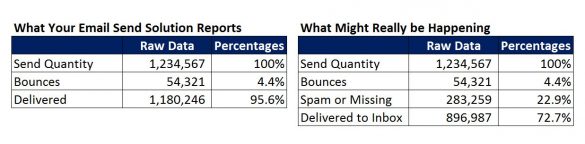
Deliverability is often confused with the email delivered rate (which I feel should be renamed the 'assumed delivered rate,' but I digress). The delivered rate is calculated by subtracting the number of bounce messages received from the quantity of email sent.
Here's the thing: most Internet Service Providers (ISPs) won't sent a bounce message if they truly believe your email to be spam, because they don't care about letting spammers know that their missives aren't being delivered. So if your email is diverted to the spam folder or, heaven forbid, zapped into oblivion (yes, it happens - more than you likely imagine!) the ISP isn't going to send a bounce message to tell you. So you could end up with a situation like this:
The spam or missing and delivered to the inbox numbers above mirror the average deliverability in the United States in 2015 according to Return Path; some senders do better but others, like the Trump campaign that made the news last month, do much worse. It matters because email messages that are delivered to the spam folder have a much smaller chance of being opened, clicked and acted on than those that land in the inbox. Those that go missing have no chance of being acted on.
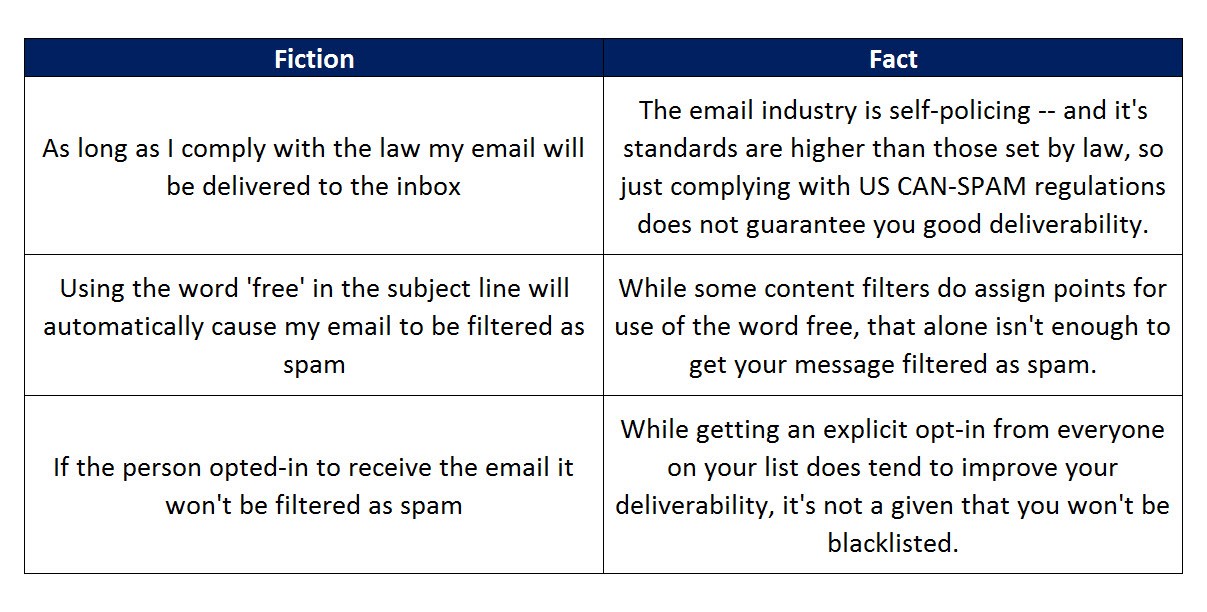
In addition to the confusion around Delivered Rate versus Deliverability, there are a lot of misconceptions about what causes email to be filtered as spam or blacklisted. Here are a few deliverability myths that abound:
So if these are all myths, what does cause some legitimate email to be filtered as spam and how can you safeguard your campaigns from blacklisting?
Watch for Part 2 of this article when we'll talk about how source, reputation and content factor into deliverability - and what you can do to protect your messages from being mistaken for spam.
Can't wait? Need help with your email deliverability, strategy or tactics sooner rather than later - or just looking for ways to make your email marketing initiatives more effective and more profitable? Feel free to contact me at JJennings@CohereOne.com and we'll see if we can help.